One known run
How to Check Pressure Loss in a Water Pipe
Work from the pipe you actually have, the flow it must carry, and the complete route to the outlet. These three steps turn those details into a clear pressure budget before you decide whether the run is suitable.
Fix the pipe first
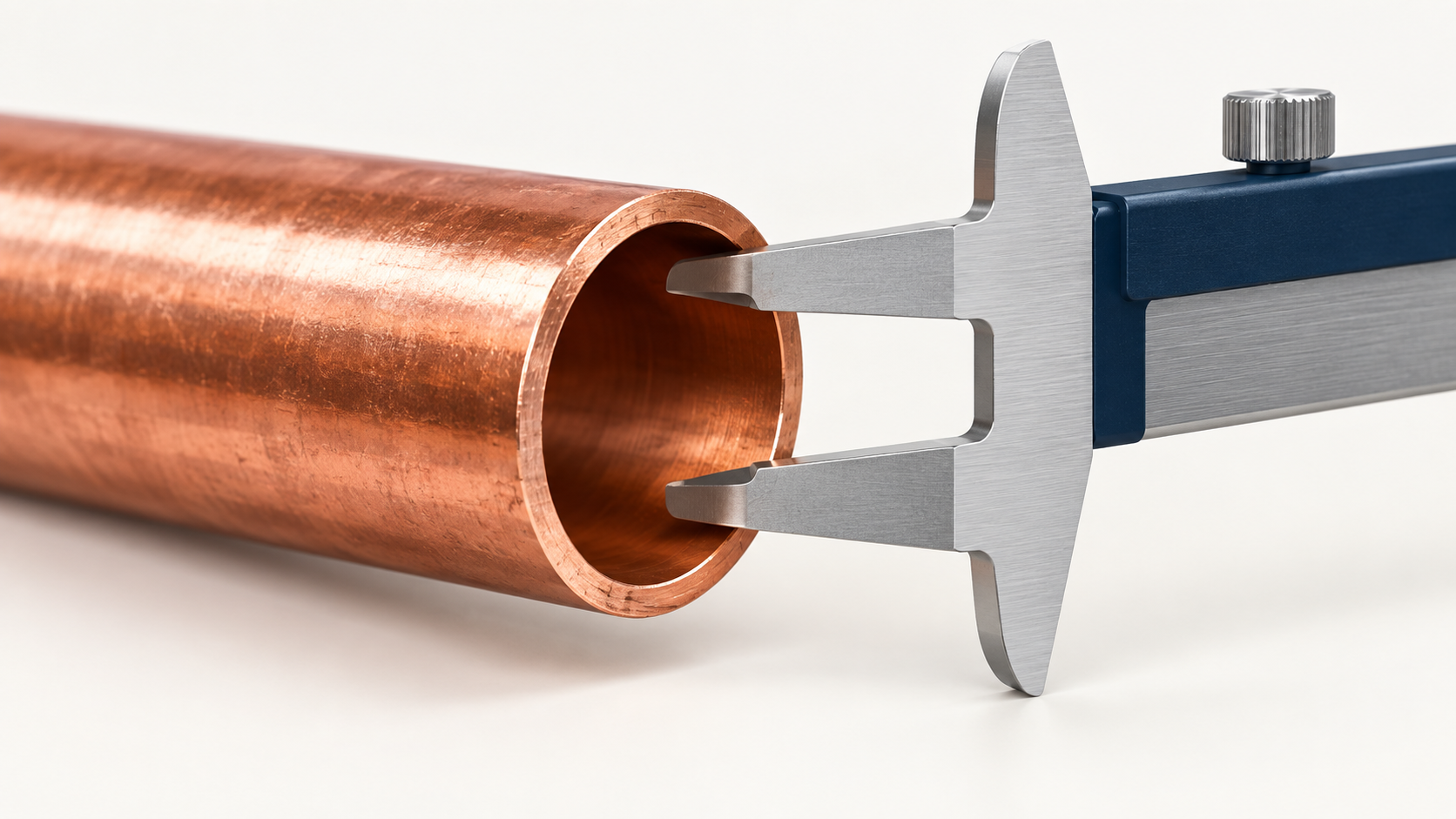
Select the installed or already-specified material and nominal size. The actual inside diameter—not the printed trade size—controls friction and water speed. If the pipe is older, scaled, or an unusual product, use a measured open bore rather than assuming the new-pipe table value still applies.
Use the flow for this section
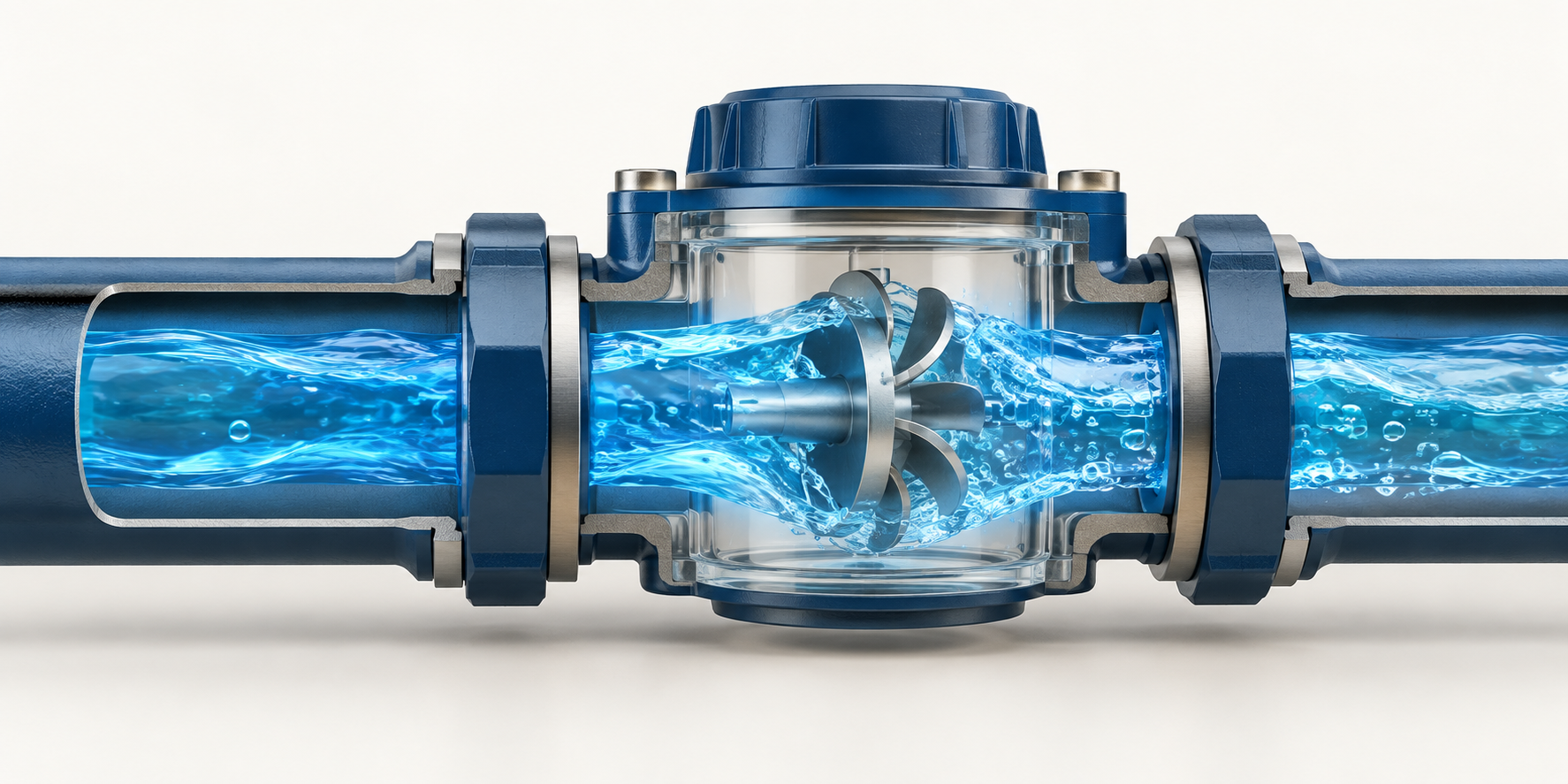
Enter the simultaneous or measured water flow that passes through this pipe section. For a branch, include the outlets that can run together downstream of this point; for a tested outlet, use the flow measured under the condition you want to evaluate. Do not substitute daily water use or a fixture-unit total.
Build the pressure budget
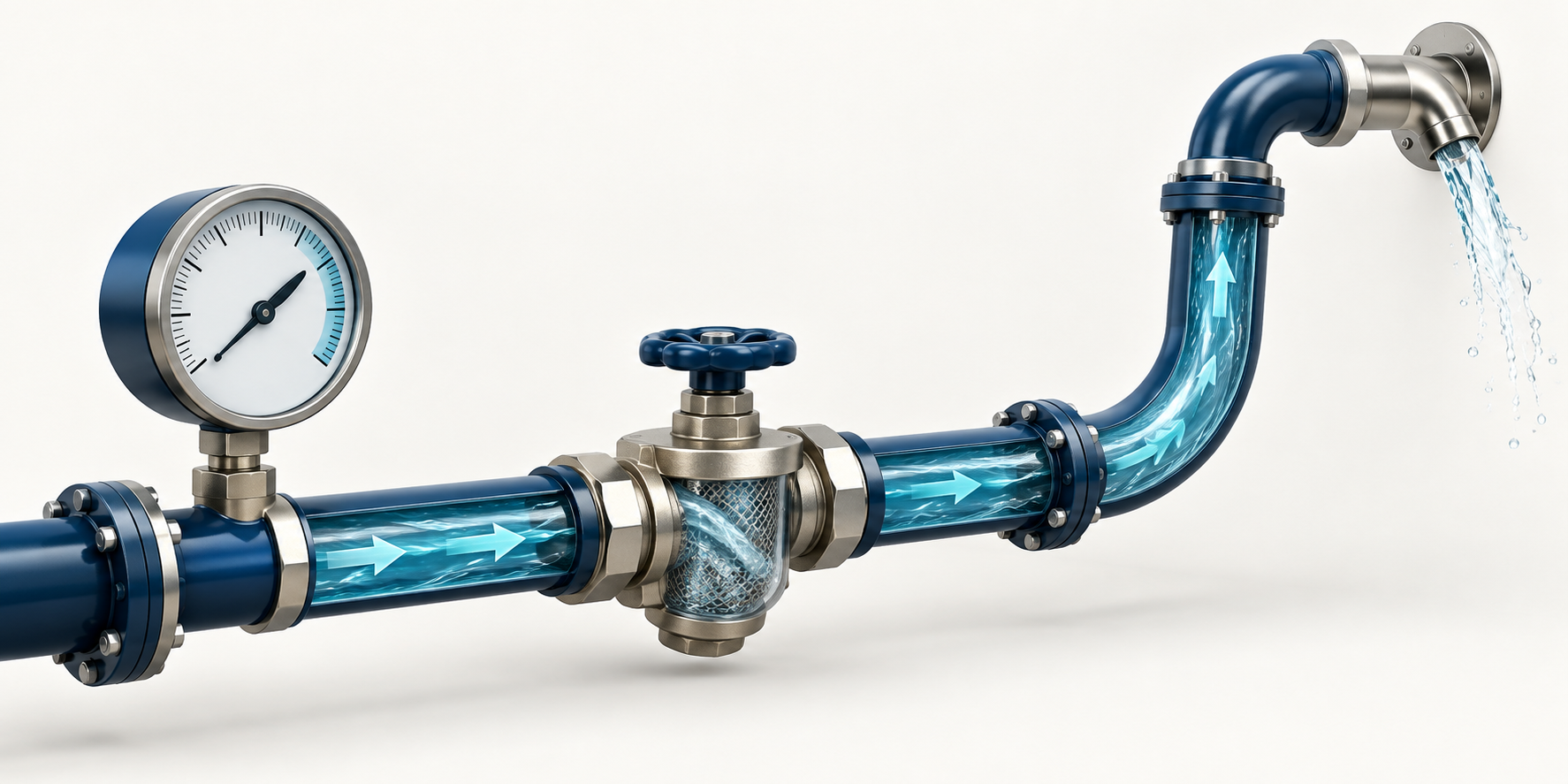
Start with pressure measured while the relevant water is running. Then subtract friction from the developed pipe length and any documented fitting allowance, pressure used to raise water uphill, and manufacturer-listed loss through filters, meters, or valves. Compare the remaining pressure with the requirement for the outlet or equipment you are checking.
Different question, different tool
Pipe Pressure Drop Is Not Pipe Sizing
| If your question is… | Use this tool | Why |
|---|---|---|
| “Will this known ¾ in. copper run still have enough pressure?” | Pipe Pressure Drop Calculator | It holds the selected pipe diameter fixed and reports the pressure budget at the flow you enter. |
| “What pipe size should I install for this new run?” | Pipe Size Calculator | It compares real pipe bores against a selected velocity criterion, then can add a separate pressure screen. |
| “How much water is this outlet actually delivering?” | Water Flow Rate Calculator | Use its timed-volume test to measure the outlet; pressure alone does not establish actual flow. |
| “How much flow can this known pipe deliver while preserving outlet pressure?” | Water Flow Rate Calculator | Use its Pipe + pressure mode. It solves for flow; this calculator instead solves for remaining pressure at a flow you already know. |
If the known-pipe check misses your outlet pressure criterion, use the Pipe Size Calculator as the next step to compare pipe sizes. Do not treat this page’s result as a size recommendation.
Worked example
Check an 80-Foot Copper Water Run
Suppose a known ¾ in. Copper Type L pipe carries 8 GPM over 80 feet. The pressure at the beginning of the run is 55 psi, the outlet is 8 feet higher, and there are 10 feet of documented fitting equivalent length. The required pressure at the outlet is 15 psi.
- 01
Use the actual bore: ¾ in. Copper Type L has a 0.785 in. inside diameter in this calculator’s reference table. At 8 GPM, that bore determines the water velocity and friction loss.
- 02
Calculate the pressure losses: The Hazen–Williams friction calculation uses the 90-foot effective length. The 8-foot rise uses approximately 3.46 psi of the available pressure.
- 03
Check the result against the requirement: Subtract pipe friction, elevation loss, and any known equipment loss from the 55 psi starting pressure. Compare the remainder with the project’s 15 psi criterion.
Replace every example input with actual project conditions. This check does not account for unknown restrictions, reduced pipe bore from scaling, pressure fluctuations, or an inaccurate flow assumption.
Calculation basis
How This Known-Pipe Check Is Calculated
This is a forward check for one selected pipe and one known flow. It estimates the pressure remaining at the end of that run; it does not solve for a pipe diameter, maximum flow, pump duty, or a branched network.
Hazen–Williams friction loss
hf = 4.52 × L × Q1.852 ÷ (C1.852 × d4.871)
Units used: hf is feet of water; L is effective length in feet (developed pipe plus an entered equivalent length); Q is flow in GPM; C is the Hazen–Williams coefficient; and d is inside diameter in inches. Friction pressure loss is hf × 0.433 psi. The result card also shows the straight-pipe friction rate per 100 ft at the entered flow and selected bore.
Pipe-size references and planning C-factors
| Pipe family in this tool | Nominal dimension reference | Planning C used |
|---|---|---|
| Copper Type L and Type M | ASTM B88 copper water-tube dimension series | 140 |
| PEX-A; CPVC CTS | ASTM F876 SDR 9; ASTM F442 CTS SDR 11 | 150 |
| PVC Schedule 40 and 80 | ASTM D1785 dimension series | 150 |
| Steel Schedule 40 | ASME B36.10M dimension series | 100 |
The inside diameters are nominal planning references from the listed series, not a survey of an installed pipe. Verify the actual product and use a measured open bore when the pipe is older, scaled, lined, or otherwise uncertain. The C-factor is a planning assumption, not a test of pipe condition.
Water and condition limits
Hazen–Williams is used here for ordinary water-service conditions. It does not correct for water temperature, viscosity, non-water fluids, unknown restrictions, or age-related roughness. Use verified product-loss data for devices, and a measured bore or a more detailed hydraulic model where those effects matter. The EPA’s EPANET documentation is a further reference for water-distribution hydraulic modeling.
Scope boundary: this page holds the pipe fixed and checks remaining pressure at the flow you enter. To compare diameters for a new run, use the Pipe Size Calculator; to solve how much flow a known pipe can carry at a pressure requirement, use the Water Flow Rate Calculator in its Pipe + pressure mode.
Scope and limits
What This Pressure-Drop Calculator Checks
This calculator evaluates one water-pipe run using the Hazen–Williams equation and the selected new-pipe planning coefficient. It reports friction loss from the developed length plus optional equivalent fitting length, static pressure change from the entered elevation, verified device loss, water velocity, and estimated end pressure.
It does not choose a pipe size, model a network with branches, calculate pump performance, convert fixture units into design flow, test actual system pressure, establish a minimum outlet pressure, select fitting allowances, account for deteriorated pipe, or confirm local-code compliance. Use manufacturer loss data at the flow being checked and confirm the actual pipe dimensions before relying on a result.
Quick answers
Pipe Pressure Drop Calculator FAQs
Why can a small change in pipe bore cause a large pressure drop?
Friction rises sharply as the actual inside diameter gets smaller. That is why two pipes with the same printed trade size can behave differently, and why this calculator uses the selected pipe’s inside diameter rather than its nominal label.
Why should I use running pressure instead of static pressure?
Static pressure is measured with no water moving. Once the relevant fixtures are running, the source, meter, and upstream piping can all lose pressure before this run begins. A running reading near the start gives this calculation a more realistic starting budget.
Should I add elbows, valves, filters, or a backflow device?
Yes, when you have a verified value. Add published equivalent pipe length for fittings and valves, then enter a manufacturer’s pressure loss for a meter, filter, regulator, or other device at the flow being checked. Do not guess a loss from the number of fittings.
Why does a lower outlet show a pressure gain?
Gravity adds about 0.433 psi for every vertical foot the water drops. The calculator credits that elevation gain, but still subtracts friction through the pipe and any device loss.
Can I check an older pipe with scale or a reduced bore?
Yes, if you know or can reasonably measure the open bore. Enter it under “measured inside diameter” so it replaces the new-pipe table value. Treat the result cautiously: internal roughness, partial restrictions, and uncertain pipe condition can add loss that this planning check cannot verify.
What should I do if the run misses my required outlet pressure?
First confirm the flow, running starting pressure, developed length, elevation, and any equipment data. If those inputs are sound, use the Pipe Size Calculator to compare new-run diameters; this page deliberately does not recommend a replacement size.